Short answer: start with bookings, not the holiday post
As a planning approach, use the first half of November to secure group bookings, launch gift cards before Black Friday, prepare Art Basel offers for visitors, and sell Christmas Eve and New Year’s Eve experiences with clear prepayment terms. Match every promotion to available seats, kitchen capacity and a working reservation link.
Miami restaurant holiday marketing spans several different occasions. An office gathering in Brickell, a visitor’s dinner in Miami Beach and a family’s Noche Buena catering order need different offers. This guide connects the 2026 calendar with practical launch dates, creative work and booking operations. The launch dates below are AYW planning recommendations, not event deadlines or forecasts of demand.
Key dates for Miami restaurant holiday marketing in 2026
| Occasion | 2026 date | Restaurant planning priority |
|---|---|---|
| Thanksgiving | Thursday, November 26 | Dine-in reservations and take-home meal collection |
| Black Friday | Friday, November 27 | Gift-card offer with clear conditions |
| Small Business Saturday | Saturday, November 28 | Local customers and neighborhood partnerships |
| Miami Art Week | November 30–December 6 | Visitor dining, group inquiries and reliable hours |
| GivingTuesday | Tuesday, December 1 | A defined community partnership, if appropriate |
| Art Basel Miami Beach, public days | December 4–6 | Menus and reservations for fair visitors |
| Hanukkah begins | Evening of Friday, December 4 | Respectful communication and accurate dietary information |
| Christmas Eve / Noche Buena | Thursday, December 24 | Family dining and catering pickup windows |
| New Year’s Eve | Thursday, December 31 | Prepaid tickets, menus and seating times |
| New Year’s Day brunch | Friday, January 1, 2027 | Confirmed opening hours and brunch reservations |
Sources: Art Basel, Greater Miami’s Art Week guide, GivingTuesday and Chabad’s Hanukkah calendar. Art Basel’s invitation-only previews are December 2–3, distinct from its public days. Religious observances should inform thoughtful service, not assumptions about what every guest celebrates.
A week-by-week launch plan: November through January
| Launch date | Tactic | Channel | Creative asset |
|---|---|---|---|
| November 2–8 | Office holiday-party packages for Brickell and Coral Gables teams | Group-dining page, email and local outreach | Room photos, sample menu and inquiry form |
| November 9–15 | Thanksgiving dine-in or take-home feast | Website, social, email and Google Business Profile | Menu, serving size, price and pickup schedule |
| November 16–22 | Gift cards with a clearly defined bonus | Email, checkout and social | Card visual and offer terms |
| November 23–29 | Thanksgiving reminders and Black Friday gift cards | Email and opted-in messaging | Last available slots and direct purchase link |
| November 23–29 | Art Week menu and visitor dining information | Local-search pages, hotel contacts and social | Bilingual menu and booking page |
| November 30–December 6 | Art Week availability and a specific GivingTuesday partnership | Google, social, email and reservations | Current availability and factual partner details |
| December 7–13 | Noche Buena lechón or catering trays, where they fit the concept | Catering page, email and opted-in WhatsApp | Tray sizes, portions, collection times and order cutoff |
| December 14–20 | New Year’s Eve prepaid tickets and seating menus | Booking platform, email and social | Seating comparison and total package information |
| December 21–27 | Christmas Eve confirmations and January 1 brunch launch | Reservations, email and opted-in messaging | Arrival instructions, brunch menu and booking link |
| December 28–January 1 | Final NYE availability and brunch reminders | Social, email and reservations | Accurate availability and confirmed opening hours |
Early November: sell groups with information an organizer can use
Build one holiday-party page that answers capacity, group size, available days, menu options and how to request a quote. Include minimum-spend arrangements when applicable, dietary questions and a realistic response time. Show the actual space, rather than relying on a generic holiday graphic.
For Brickell and Coral Gables outreach, choose relevant local relationships and permission-based channels. Give the inquiry an owner and a process: requested date, headcount, budget, follow-up and confirmation. Maintain a simple pipeline so the team knows which dates remain available and which proposals need attention.
Thanksgiving: make the dining format unmistakable
Choose whether your kitchen can support dine-in, take-home or both. Separate their pages or ordering options so customers do not confuse a table reservation with a pickup order. Publish serving sizes, included dishes, reheating information where relevant, collection windows and the final order date. Photograph what the customer will actually receive.
Set the cutoff with operations, not with the advertising calendar alone. A take-home feast can create heavy preparation and collection pressure even when the dining room looks quiet. Assign pickup slots and a contact for questions. Once capacity is reached, close the offer promptly across the website, ads and social posts rather than leaving an unavailable promise online.
Black Friday: use gift cards with a margin-aware offer
A bonus can encourage purchase, but it creates an obligation to serve future visits. Model what happens when the card and bonus are redeemed. Explain delivery method, redemption conditions and any distinction between purchased value and promotional value. Have the operator and relevant advisers review the terms before launch; avoid presenting a complex offer as an unconditional discount.
Test buying and receiving a card from a phone. Give front-of-house staff a simple explanation they can repeat accurately. Read our Black Friday Miami 2026 guide for the broader retail calendar. The aim is a usable gift and a coherent future visit, not simply a spike in card sales.
Art Week: help visitors make a confident dining choice
Wynwood and Miami Beach require different location information. State your actual neighborhood, address, travel considerations and service hours; do not imply that every restaurant is steps from every fair. Offer a menu that suits your operation and explain the likely duration of the dining experience when guests have another event afterward.
Create a direct path for group inquiries from hotel teams, galleries and production crews. Keep menus readable on mobile and provide English and Spanish information. Update availability rather than publishing artificial scarcity. Our Art Basel Miami Beach brand strategy guide provides context for connecting a specific offer with the week. An off-site dinner should not imply an official Art Basel partnership.
December: plan Noche Buena, NYE and brunch as separate products
Where lechón and catering trays fit your concept, specify portions, accompaniments and pickup times. Do not add a traditional dish merely as a keyword if the kitchen cannot deliver it well. Confirm dietary requirements individually, and make no kosher or other certification claim without a valid basis. Different families celebrate differently; service should make room for those differences.
For NYE, show the menu, seating time, duration and what the ticket includes. Explain deposits, cancellations, taxes and service charges before payment. Identify whether an earlier seating must end before a later service. Publish January 1 brunch only after staffing and opening hours are confirmed; it should be a deliverable offer rather than an automatic extension of the previous night.
Google Business Profile and local search: remove uncertainty
Google lets businesses set special hours for holidays and recommends confirming holiday hours even when they match regular hours. Use this setting rather than changing the normal weekly schedule for one evening. Google’s special-hours instructions.
Also review reservation and ordering links, new photos, menu details and any event posts available to your profile. Check the website and booking platform against the same calendar. For intent such as “open on Christmas Eve near me,” the useful answer is an accurate date, address, menu and way to book. Publishing the phrase repeatedly cannot compensate for missing information.
Clear public information can help search and AI systems interpret the restaurant. Google Business Profile is one discovery surface; it does not guarantee inclusion in ChatGPT, Perplexity or another AI answer. Keep the facts consistent across your own pages and relevant listings. Attribute bookings where possible, and evaluate actual qualified visits instead of promising a particular ranking or recommendation.
Social, email and WhatsApp/SMS: change the message as the season moves
In November, lead with planning: group menus, room options, Thanksgiving choices and gift cards. In December, shift toward specific experiences, catering cutoffs, Art Week availability and confirmed seatings. Every promotional post should include a relevant reservation or ordering CTA. A link to the homepage is weaker when the guest still has to search for the offer.
Use email to give existing subscribers fuller details, then follow up based on the offer they requested or purchased. Use WhatsApp or SMS only where customers have agreed to that channel, with a clear way to stop messages. Operational confirmations and promotional blasts serve different purposes; the team should know which kind it is sending and why the recipient is receiving it.
Build both language versions before launch. Prices, cutoffs, included dishes and cancellation terms should match. Prepare a small response library for questions about parking, dietary needs and pickup. A practical content sequence is offer, proof, explanation, reminder and confirmation.
Experiences that give guests a reason to reserve
A themed dinner, chef’s table or small pop-up can work when it expresses the restaurant’s identity. Begin with the guest journey: arrival, service, food, atmosphere and the reason to return. Check capacity and costs before commissioning visuals. The experience should still be worthwhile for guests who never post a photograph.
Connect the event to a booking page, staffing plan and post-visit follow-up. Read why restaurants sell experiences and explore our experiential marketing in Miami. An effective creative idea gives people something specific to choose; it also gives operations a clear promise to deliver.
Common mistakes that weaken the holiday campaign
Promoting too late leaves little time for group decisions. Taking high-demand reservations without suitable confirmation or deposit arrangements exposes capacity to no-shows. Conflicting hours across Google and the website make even a good offer difficult to trust. English-only information can leave part of the audience without answers. None of these problems is solved by simply posting more often.
Before each launch, check the complete mobile journey, assigned inquiry owner and kitchen limits. Track confirmed covers, catering orders, contribution margin and cancellations, alongside campaign spend. Ask what remains after discounts, production and service costs. Our guide to selling more at your restaurant connects acquisition with the broader commercial picture.
How AYW helps Miami restaurants prepare for the holidays
AYW connects positioning, creative work, content, paid media, PR and digital journeys for hospitality brands. We help turn the calendar into a manageable campaign: a clear offer, bilingual assets, relevant destinations and measurement tied to the operation. Every restaurant needs a scope that reflects its concept, resources and available capacity.
Work with a restaurant marketing agency in Miami to prioritize the moments that fit your business. Tell AYW what you want to book, launch or grow. Start with the offer and the service plan, then build the communication around them.
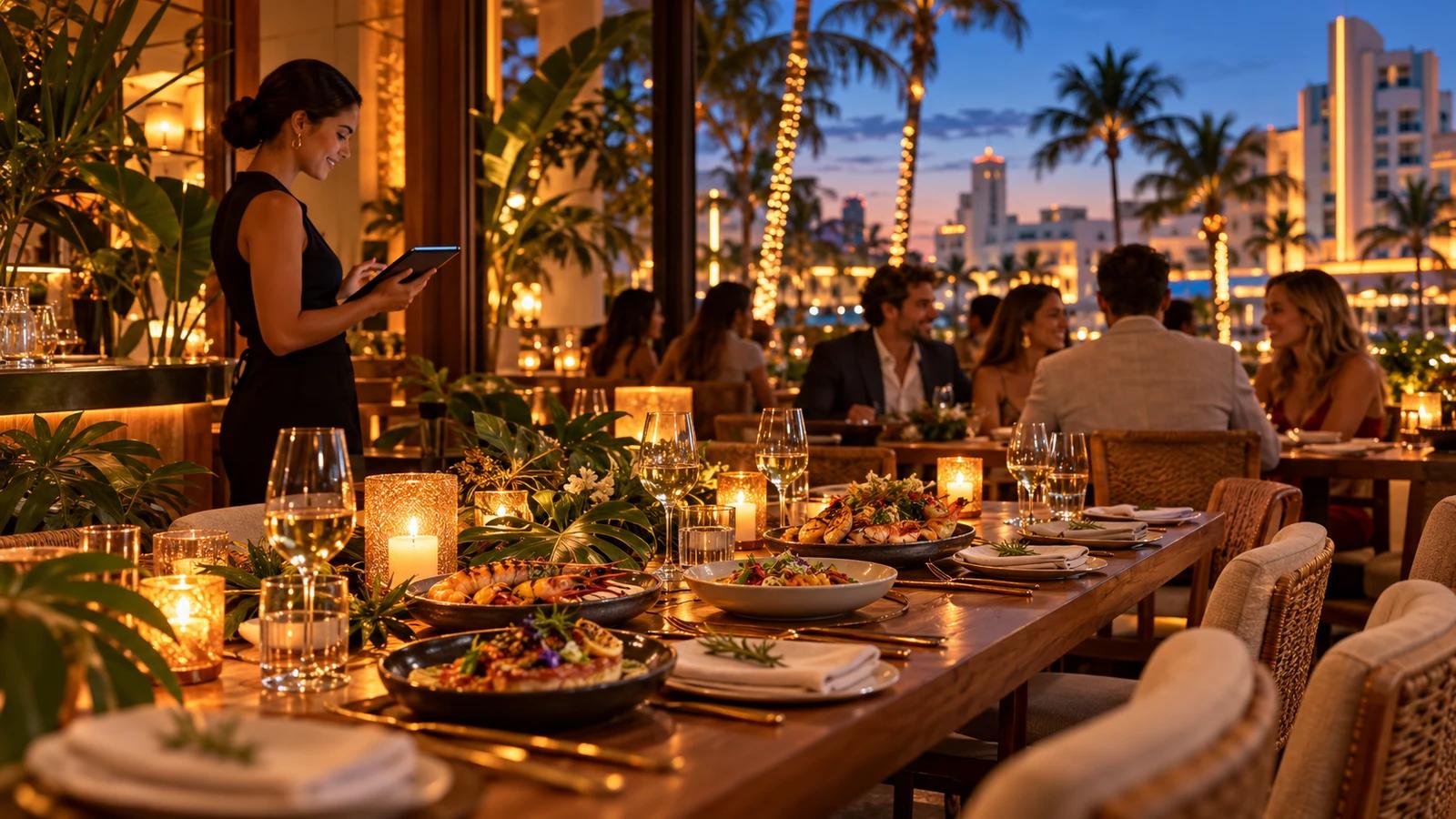
Calendar checked October 26, 2026. Launch windows and tactics are planning recommendations. Hero image is an AI-generated restaurant concept, not a real venue or confirmed holiday offer.