Miami Spice 2026: a marketing opportunity to fill tables during slow season
Miami Spice was created to solve a specific problem: help restaurants across Greater Miami and Miami Beach sustain traffic during the slowest months of the year. In 2026, its 25th edition reached a record of more than 400 participating restaurants and was extended for an additional month, through October 31.
The extension is more than good news for diners. It gives restaurants four extra weeks to turn a fixed-price offer into customer acquisition, content, first-party data and future visits.
What Miami Spice offers in 2026
The Greater Miami Convention & Visitors Bureau program offers three-course menus with a minimum 30% savings compared with regular pricing:
- Brunch and lunch: $40.
- Dinner: $50 or $65.
- Miami Spice Reserve: premium experiences starting at $95.
- Dates: August 1 through October 31, 2026, at restaurants that confirmed the extension.
One important detail: not every original participant continued into October. Diners should confirm the menu, available days, supplements and price on the restaurant’s official listing before booking.
Since 2002: a promotion built for the off-season
Miami Spice launched in August 2002 after the sharp impact of the September 11, 2001 attacks on tourism and hospitality. The first edition brought together roughly 56 restaurants, with $19.99 lunch and $29.99 dinner menus. Demand led organizers to extend that first run by two weeks, and the August–September format became permanent in 2003.
Twenty-five editions later, the mechanism remains the same: lower the trial barrier when demand is soft and give people a clear reason to book now.
What impact does it create?
The GMCVB has not published a recent figure for incremental sales, profitability or average return per restaurant. A single ROI claim would be misleading because outcomes depend on food cost, beverage mix, capacity, participating days and how many first-time guests return.
Historical scale indicators do exist. Earlier program reports recorded 119,980 diners in 2006, about 150,000 menus in 2008 and more than 158,000 meals in 2011. More than 300 restaurants participated in 2025; in 2026 the total passed 400 and prompted the October extension. The most useful question is not only how many tables are filled, but what each restaurant does with that first visit.
The marketing opportunity behind the menu
A discounted menu may lower the average check. Its real value appears when the restaurant treats the program as an acquisition funnel instead of an isolated promotion.
- Lunch builds frequency. A focused menu can attract offices, meetings, neighborhood residents and guests who were not ready to commit to a full-price dinner.
- Dinner builds experience. Service, atmosphere, a signature dish and beverage upsells can turn perceived value into margin and word of mouth.
- Content expands reach. Reels featuring dishes, the kitchen, the chef, the room and real guest reactions make the offer visible before people compare twenty menus.
- Paid media fills specific windows. Geo-targeted campaigns by radius, time and audience can support weekday lunch or lower-occupancy evenings.
- CRM protects the investment. Reservations, Wi-Fi, a loyalty benefit or a post-visit invitation can keep the conversation going after October.
- Operations create the return visit. The goal does not end when the Spice check is paid; that is when the relationship with a new customer begins.
Tatore: turning participation into positioning
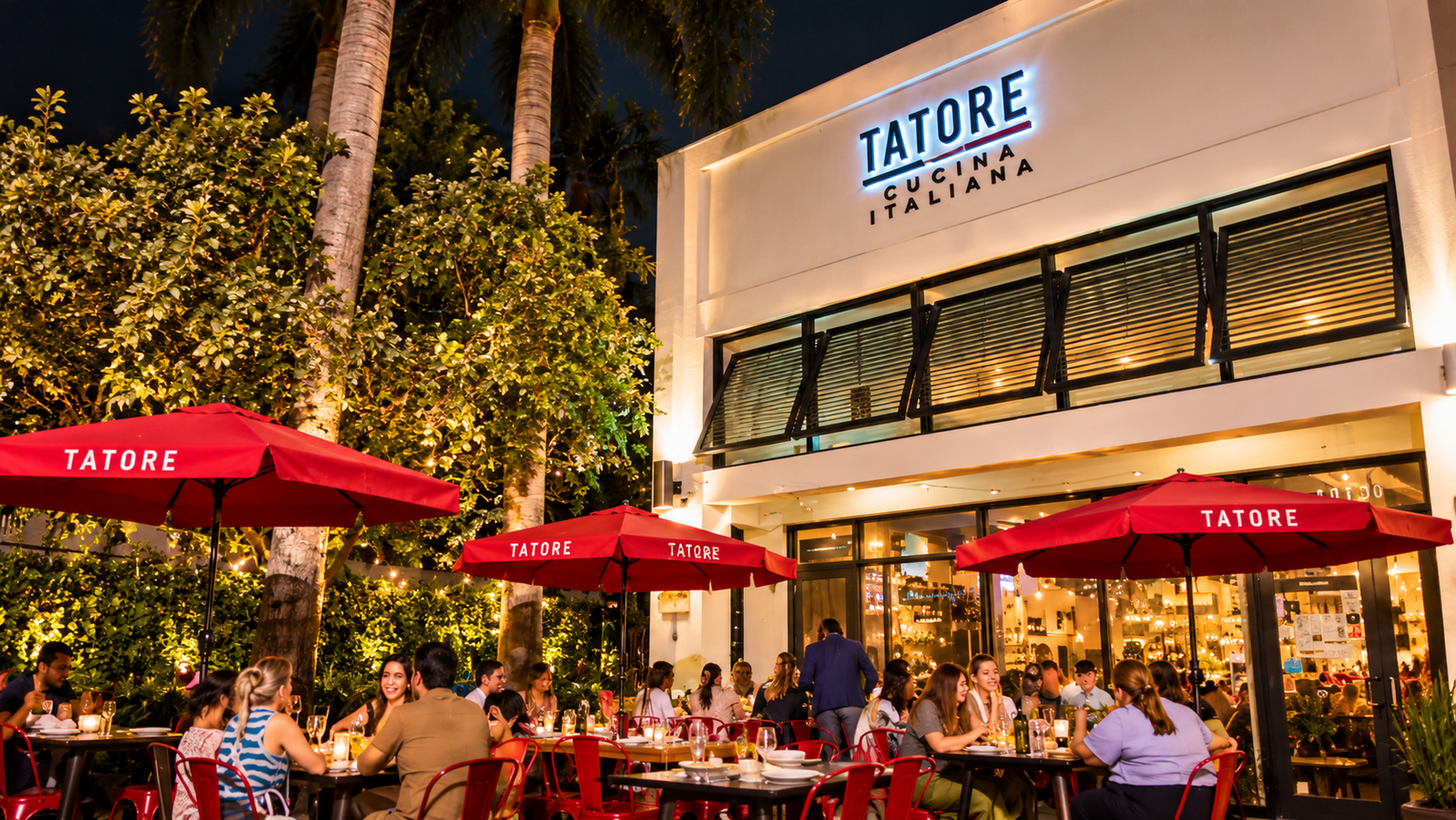
Tatore in North Miami Beach participates in Miami Spice Extended with a $40 lunch and $50 dinner available daily. Its offer has a clear campaign advantage: a family story, fresh pasta, stone-fired pizza, milanesas, artisan gelato and a recognizable outdoor terrace.
The marketing message should go beyond “we have Miami Spice.” A campaign can introduce the family heritage, lead with a hero dish, differentiate lunch from dinner, show the real atmosphere and close with a reservation. After the meal, an invitation to return for the Fugazzetta, pasta or gelato turns the initial discount into a second full-price occasion.
Our 10 picks for Miami Spice Extended 2026
These ten restaurants appear in the official directory with the Miami Spice Extended label. We selected them for value, culinary point of view, experience and neighborhood variety.
- Tatore — North Miami Beach. A warm, family-friendly choice for house-made pasta, stone-fired pizza and artisan desserts. It is a strong example of how a neighborhood restaurant can use Miami Spice to grow both lunch and dinner without losing its identity.
- COTE Miami — Miami Design District. The MICHELIN-starred combination of an American steakhouse and Korean barbecue makes the seasonal menu an entry point into an experience that usually carries a higher price.
- Le Jardinier — Miami Design District. Modern, seasonal, vegetable-forward French cooking in a light-filled MICHELIN-starred room. It is a compelling place to compare the lunch proposition with the dinner experience.
- Stubborn Seed — South of Fifth. Jeremy Ford’s restaurant combines creativity, technique and local sourcing. Its three-course menu suits diners looking for chef-driven cooking with a lower trial barrier.
- Michael's Genuine Food & Drink — Miami Design District. Michael Schwartz’s Bib Gourmand neighborhood classic pairs seasonal ingredients with warm hospitality for lunch, meetings or a relaxed dinner.
- Tâm Tâm — Downtown Miami. Bold Vietnamese drinking food in a lively wine-bar setting. Its energy and visual identity also give the experience strong social-content potential.
- MIKA — Coral Gables. Chef Michael White’s coastal Mediterranean perspective brings together crudo, house-made pasta and a polished but approachable setting.
- Matador Room — Miami Beach. Jean-Georges reimagines Spanish, Caribbean and South American flavors in a glamorous supper-club dining room with an ocean-facing terrace.
- Los Fuegos by Francis Mallmann — Faena Miami Beach. Open-fire South American cooking and a theatrical setting turn dinner into a memorable content moment.
- Beauty and the Butcher — Coral Gables. Seasonal small plates, meat-driven cooking and a contemporary Jeremy Ford concept work well for a group outing or a first visit during Spice.
Menus and participating days may change. Confirm October availability and book through the official Miami Spice site or directly with each restaurant.
How to measure a Miami Spice campaign
The report should not end with covers. To understand whether the promotion worked, track:
- Reservations and occupancy by service, day and time slot.
- Cost per reservation and no-show rate.
- Average check, beverages, supplements and contribution margin.
- Share of first-time guests and geographic origin.
- Saved, shared and user-generated content.
- Email or SMS capture with consent.
- Second-visit rate at 30, 60 and 90 days.
That final metric shows whether Miami Spice was simply a filled table during slow season or the beginning of a profitable customer relationship.
Sources and methodology
Dates, pricing, extension and participation: GMCVB — Miami Spice Restaurant Months Extends Through October 31.
Menus and extended restaurants: official Miami Spice website.
Program history and historical counts: Miami Spice, Explained: 25 Years of the Deal That Keeps Restaurants Open in August.
Tatore listing and menu: GMCVB — Tatore Restaurant.