
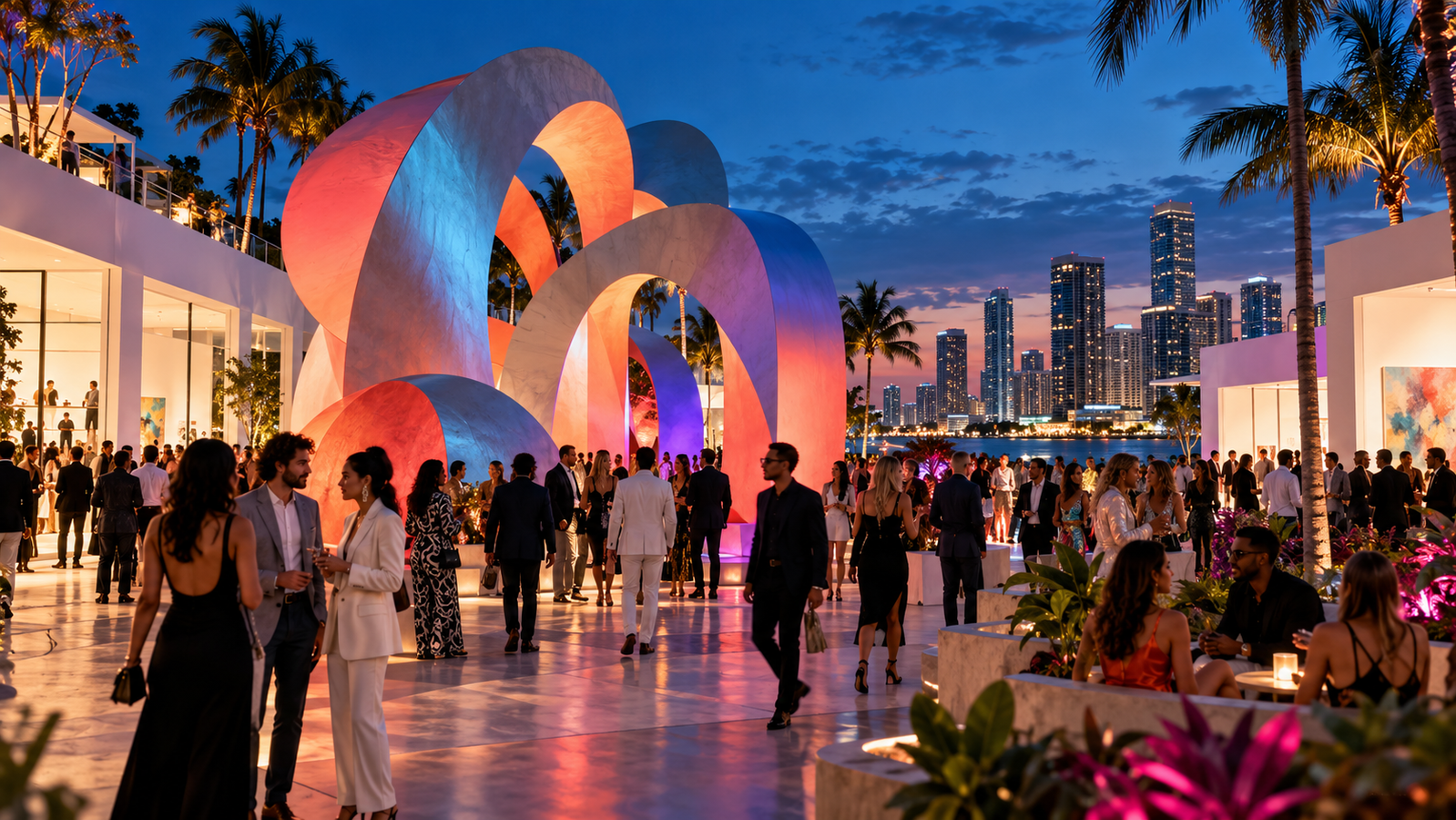
Art Basel Miami Beach 2026: how to win attention during Miami’s most competitive week
For one week, Miami brings together collectors, artists, gallerists, executives, media, creators and high-value travelers. It also concentrates hundreds of openings, fairs, dinners, parties, pop-ups and collaborations competing for the same hours. For a brand, Art Week is both an enormous opportunity and an attention problem.
The answer is not simply to “do something for Art Basel.” Brands need a relevant idea, the right place and time, and a clear reason for people to stop, participate, share or visit.
Art Basel Miami Beach and Miami Art Week 2026 dates
- Miami Art Week: Monday, November 30 through Sunday, December 6, 2026.
- Art Basel Miami Beach VIP Preview: Wednesday, December 2 and Thursday, December 3, by invitation only.
- Art Basel Miami Beach public days: Friday, December 4 through Sunday, December 6, 2026.
- Venue: Miami Beach Convention Center, 1901 Convention Center Drive, Miami Beach.
The main fair is the center of gravity, but the week unfolds across Miami Beach, Wynwood, Downtown, Edgewater, the Design District, Little River and other neighborhoods.
What to expect in 2026
Art Basel has announced a more focused edition with a substantially reconfigured floor plan. The scale remains global:
- 272 exhibitors from more than 40 countries and territories.
- 254 galleries across the main sectors and more than 30 first-time participants.
- Galleries, Nova, Positions and Survey, spanning Modern, postwar and contemporary work, solo projects and historically significant practices.
- Zero 10 returns with Generation, its largest presentation yet, featuring 19 projects focused on digital and technology-driven practices.
- A new public outdoor work by James Turrell, free to visit.
- Between Tides, a participatory installation of artist-designed ping-pong tables in Collins Park.
- The Art Basel Awards Night takes place Thursday, December 3 at the New World Center.
Beyond the Convention Center, more than twenty fairs and platforms will activate the city, including Design Miami, Art Miami, CONTEXT, NADA, SCOPE, Untitled Art, Aqua, Pinta and Prizm, alongside museums, private collections, hotels and independent spaces.
The impact on Miami
Art Week is more than a cultural event. It is one of the most important economic moments on Miami’s calendar. The City of Miami Beach estimated that Art Basel Miami Beach 2024 generated $547 million in economic activity, nearly 10% more than the previous year, with more than 75,000 attendees.
Hotels reported near-capacity occupancy and premium rates. Restaurants, clubs, luxury retail, transportation, production, staffing, security and venues all benefited from the spending. The city has historically estimated that the broader Art Week ecosystem attracts more than 100,000 people over the weekend.
The $547 million figure is a 2024 historical benchmark, not a guaranteed 2026 forecast. Its value is in showing the scale and shape of the impact: an international, culturally engaged audience moving across the city and making hospitality, retail and entertainment decisions in a compressed period.
The brand paradox: more people, less attention
Art Week increases audience volume while multiplying noise. People receive invitations to breakfasts, previews, installations, dinners, panels and parties weeks in advance. A brand that arrives late with a generic activation or no clear benefit can spend heavily and remain invisible.
Attention fragments across three variables:
- Geography: crossing the bay or moving among South Beach, Wynwood and Downtown can consume a large part of the day.
- Access: many experiences are private, RSVP-based, capacity-limited or curated.
- Schedule: visitors prioritize moments with cultural, social or professional value and skip experiences that feel interchangeable.
The strategy must reduce friction and increase relevance. Adding a logo to another party is not enough.
How brands can use Art Basel 2026
- Choose an audience, not “the Basel crowd.” Collectors, creators, press, executives, cultural tourists and residents have different motivations. The offer, channel and timing should begin with one specific audience. For a related retail perspective, see how fashion brands turn Miami Fashion Week attention into online sales. Plan the live component with an experiential marketing agency in Miami.
- Define a credible cultural territory. The brand needs an authentic connection to art, design, technology, hospitality or community. An artist or institutional collaboration works when it produces a shared idea instead of using art as decoration.
- Create utility. A recharge lounge, transportation, a curated guide, a well-timed meal or a place to meet may earn more preference than another purposeless party.
- Launch before people land. Schedules take shape two to four weeks in advance. The landing page, RSVP, PR, creators, email and paid media should build demand before November 30.
- Design for real geography. Account for routes, traffic, parking and limited time. Communication must explain where, when, how long and why the experience is worth the detour.
- Operate content in real time. Prepare templates, approvals, a team and a daily calendar to publish moments, guests, availability and recaps while the conversation is active.
- Use paid media by moment and radius. Geofencing, traveler audiences, retargeting and daypart campaigns can move traffic to a restaurant, store, hotel or event while capacity remains.
- Turn attention into first-party data. RSVPs, reservations, codes, QR experiences and registrations allow the relationship to continue after the week. The database is part of the return.
Three campaign models
Hospitality and restaurants
A limited menu or experience can connect to a nearby cultural route. Combine reservations, concierge, local creators, “near me” search and paid media to fill specific windows before and after the fairs.
Retail, fashion and lifestyle
A limited edition or artist collaboration can become an installation, content system and product. The store should operate as a destination with appointments, scheduled moments and a narrative that exists before, during and after Art Week.
Luxury, technology and B2B
Private hospitality works best when it prioritizes relationship quality over volume. A small dinner, curated tour or conversation with real access can create more value than a large event with no follow-up.
A three-phase campaign system
- Before: concept, identity, partners, PR, creators, landing page, guest list, reservations and consideration campaigns.
- During: real-time coverage, media optimization, capacity management, location-based messaging, community management and data capture.
- After: recap, editorial content, press, thank-you messages, lead nurturing, return offers and commercial measurement.
What to measure
- Qualified reach and share of voice during Art Week.
- Landing-page traffic, cost per RSVP and attendance rate.
- Reservations, visits, sales and average check by day and time.
- Incremental foot traffic and redeemed codes.
- User-generated content, saves, shares and high-quality mentions.
- Consented contacts and commercial opportunities.
- Post-event return: repeat visits, converted leads and reusable content value.
A successful campaign is not measured by how many people walked through an event. It is measured by how much relevant attention became action and relationship.
How Adyouwish can help
We can build your complete Art Basel and Miami Art Week strategy: creative concept, partnerships, experience design, content, creators, PR, paid media, landing pages, traffic acquisition, real-time coverage and measurement.
The goal is to keep your brand from becoming one more invitation in an overloaded calendar. It should own a clear place in the conversation and turn the energy of the week into traffic, reservations, sales or relationships that continue after December.
Sources
Official dates and visitor information: Art Basel Miami Beach 2026.
Exhibitors and 2026 highlights: Art Basel — 272 exhibitors and a reconfigured showfloor.
Fair calendar: GMCVB — Quick Guide to Miami Art Week Fairs.
Historical economic impact: City of Miami Beach — Art Basel Miami Beach 2024.