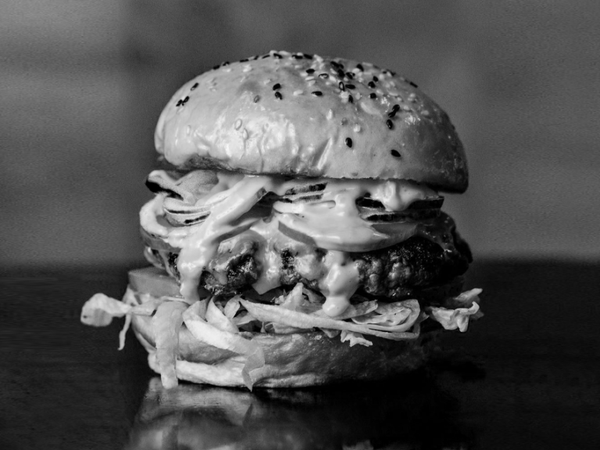
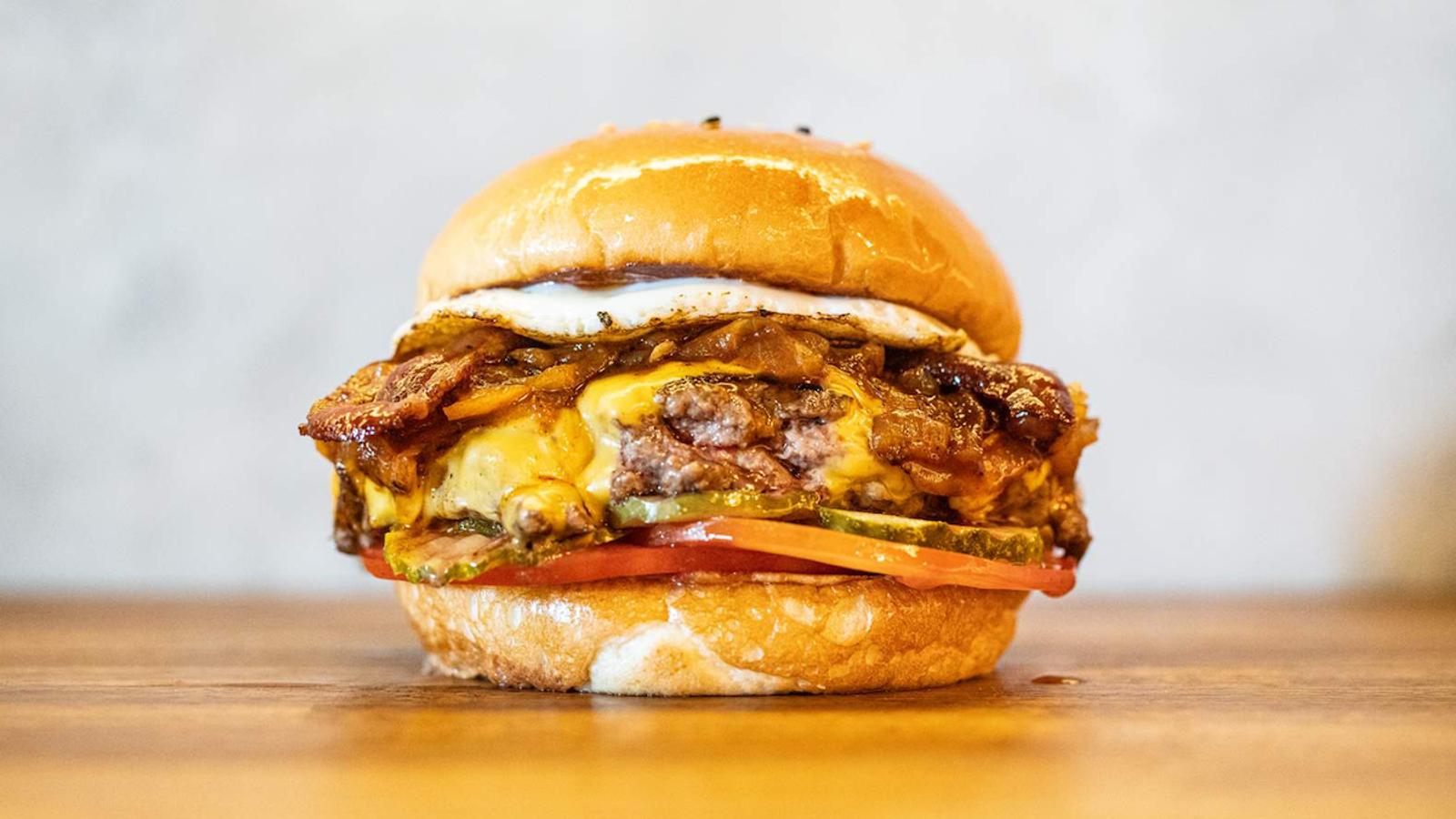
In 2021, a family from Buenos Aires opened a burger restaurant in Miami and told everyone, in writing and in interviews, that they had the best burger in the world.
Argentina announcing the best burger in America is the kind of claim that should have been laughed out of the room. The US is the country that invented the burger as a cultural object. The country with In-N-Out, Five Guys, Shake Shack, Smashburger, every regional chain you can name. Saying you have the best burger in the country, as an Argentinian, in Miami, is like a Texas barbecue place opening in Buenos Aires and announcing they make a better asado than the locals. Or a Canadian opening an arepa shop in Caracas. It's not a claim. It's an act of provocation.
And then they backed it up. Within a year of opening, La Birra Bar won the SOBEWFF Burger Bash People's Choice Award — the most prestigious burger competition in the United States, hosted by the South Beach Wine & Food Festival. Then they won "Best Burger in Miami" from Miami New Times in 2022. Then again in 2023. Then they won the North Miami BrewFest Best Eatery in 2023, produced by FIU.
Today La Birra Bar has 5 locations across South Florida and is opening in Times Square, New York City. This is the story of how the launch worked — and what we, AYW, learned from running the marketing for one of the most successful Latin restaurant launches in the US in recent years.
The thesis behind the campaign
When La Birra Bar founder Daniel Cocchia came to us, the brand had 14 locations across Argentina, a cult following, and a product that already won "best burger" awards in Buenos Aires. The question wasn't whether the product was good. The product was great. The question was: how do you sell an Argentinian burger to Americans without being polite about it?
Most foreign restaurants entering the US market try to assimilate. They soften their identity. They make their menu "more American." They take the edges off. We did the opposite. We doubled down on the foreignness, because the foreignness was the value.
The campaign thesis was simple and uncomfortable: The best burger in the world is coming to Miami, and it's not from Miami. We weren't asking for permission to enter the market. We were announcing it. The framing put Americans in the position of having to prove us wrong by tasting it.
Why this worked
In the US, burgers had never been a contested category. People had preferences — In-N-Out vs Five Guys, smashburger vs thick patty — but nobody was debating which country makes the best burger. Burgers were American. Period.
By saying "we have the best burger and we're Argentinian," we forced a conversation that didn't exist before. The local market reacted with curiosity rather than dismissal. Miami New Times wrote about it. Local 10 wrote about it. The Miami Herald wrote about it. We didn't pay for any of that coverage. The provocation did the work for us.
The press strategy
Most agencies treat press as a one-shot event. You hire a publicist for 90 days, they fire off a press release for your opening, you get some coverage, and then it ends. We treated it as a rolling, layered, multi-quarter campaign.
We worked deliberately with three layers of press at once:
- Local Miami food press: Miami New Times, Eater Miami, The Infatuation Miami, Miami Herald, Time Out Miami. These are the outlets Miamians actually read when deciding where to eat.
- National Latin media: Latin Times, Hola Miami, Telemundo, Univision, El Nuevo Herald. This is where the Spanish-speaking 70% of Miami discovers a new restaurant — and where the broader US Latin diaspora pays attention.
- Government and institutional outreach: We made a deliberate effort to connect the brand to the local culinary ecosystem, working with government and industry organizations to position La Birra Bar as a legitimate cultural import — not a one-off novelty. That positioning is what eventually got us invited to the SOBEWFF Burger Bash.
That third layer is where most foreign brands fail. They show up, run social ads, and wait for a journalist to discover them. We didn't wait. We went looking for the institutions, the awards, the food festivals — and we made sure La Birra Bar was at the table.
SOBEWFF Burger Bash — the inflection point
The South Beach Wine & Food Festival's Burger Bash is one of the most-watched burger events in the country. Hosted by the Food Network, judged by chefs and tastemakers, attended by thousands. People's Choice Award winners get covered nationally.
For a restaurant that had been open less than 12 months, getting invited to participate was already a coup. Winning the People's Choice Award was a national announcement: we are not a curiosity from Argentina. We are the best burger here, on American soil, judged by Americans.
The coverage that followed wasn't paid placement. It was earned media — the most valuable kind. Local 10, NBC6, Miami Herald, Latin Times, ESPN Deportes, and dozens of food bloggers picked up the story. By the time the dust settled, La Birra Bar wasn't a new Argentinian restaurant anymore. It was the best burger in America.
Translating the brand without diluting it
The bigger creative challenge wasn't marketing strategy. It was brand translation.
La Birra Bar had a distinct identity in Argentina. The product had nicknames its loyal customers used — "la almohada inteligente" (the smart pillow) for the signature bun, "el templo" (the temple) for the original location. The brand had a casual, family-business warmth. None of that translated literally into English. We had to figure out which elements to preserve, which to adapt, and which to leave behind entirely.
Our principles for the translation work:
- Preserve the artisanal story. The bread baked daily on premises, the meat blend ground in-house from three different cuts with a specific fat ratio, the made-from-scratch sauces. American consumers reward craftsmanship — but only when you communicate it specifically. Vague claims like "high quality ingredients" don't work. Concrete claims like "the patty is hand-chopped from a proprietary three-cut blend, ground fresh daily" do.
- Adapt the menu naming. Some Argentinian names made sense in English. "Clásica" stayed. "Burger 532" — the five-patty tower of beef, cheddar, and bacon — became an Instagram phenomenon by name. But internal Argentinian references got replaced with English equivalents that conveyed the same vibe.
- Lean into the Argentinian identity, don't apologize for it. When Lionel Messi moved to Inter Miami, we launched the Messy Burger — a deliberate misspelling, complete with the message "It's not soccer, it's fútbol" stamped on the bread. It became a viral hit, picked up by national sports media as well as food media. That campaign worked because it didn't try to be American. It was unapologetically Argentinian in Miami, talking directly to the Argentinian and Latin American audience that had just gotten Messi as a neighbor.
- Respect what was already strong. The visual identity, the typography, the photography style — La Birra Bar already had a strong brand from Argentina. Our job wasn't to redo it. It was to make sure the strongest elements crossed the border intact, and the weaker ones got upgraded for a US audience.
What we did with creators and influencers
Most restaurant launches in Miami do the same lazy thing with influencers: invite 30 random food creators to a soft opening, hand out free burgers, hope for posts. That approach produces almost zero ROI because the audience overlap is random.
We did something different. We worked specifically with:
- Micro food creators with 10K-50K followers whose audiences were concentrated in Miami and the broader Latin diaspora — not national mega-accounts whose followers couldn't visit the restaurant.
- Argentinian and Latin American food personalities in the US — people who already had the cultural context to understand what "Argentinian burger" meant, and whose audiences would trust their recommendation.
- Soccer creators when Messi arrived, leveraging the Messy Burger to enter a completely different audience overlap — sports content meets food content, which Instagram's algorithm rewards heavily.
The point isn't to be on as many feeds as possible. The point is to be on the right feeds, with the right framing, in front of people who can actually walk in and order.
Helping the expansion
Once the original Miami location succeeded, our role evolved. We weren't just running marketing for one restaurant anymore. We were supporting an expansion play.
Each new location had its own challenges:
- Fort Lauderdale: A different neighborhood profile, less Latin density, more general restaurant tourism. The campaign had to lean more into the "best burger" awards and less into the cultural in-group references.
- Wynwood: An arts/creative neighborhood. Campaign emphasized design, art partnerships, late-night culture, and pairing with local creators in the design district.
- North Miami Beach (Biscayne Boulevard): The original audience profile.
We didn't recycle the same campaign across all locations. Each opening was treated as its own micro-launch with the neighborhood-specific targeting it required.
The results
- 2022 SOBEWFF Burger Bash People's Choice Award — Best Burger in the US
- Miami New Times Best Burger — won in 2022 and 2023 (consecutive years)
- North Miami BrewFest Best Eatery 2023 — produced by FIU
- Top 5 Burger Joints in the World — two consecutive years (industry rankings)
- 5 locations in the US today
- Earned national press coverage in Miami Herald, Miami New Times, Latin Times, Local 10, ESPN Deportes, Food Network properties, and dozens of food publications
- Featured by Lionel Messi era — the Messy Burger became a Miami cultural moment
The numbers matter, but here's the bigger point: none of the awards were paid placements. None of the press coverage was bought. Every win was earned through positioning, product, and execution. That's the playbook we use when we run a launch.
What this case study actually proves
Three lessons we'd take into any similar launch:
1. The provocation is the strategy
Most restaurant launches in the US play it safe. They position themselves as a polite addition to the local food scene. We did the opposite — and that's exactly why La Birra Bar got attention. In a saturated market, the safe positioning is the dangerous one. It guarantees you'll be invisible.
2. Foreign brands shouldn't pretend to be local
The instinct of every foreign brand entering the US is to soften its accent. That instinct is wrong. The accent is the value. American consumers — especially in markets like Miami where international cuisine is the norm — reward authenticity, not assimilation.
3. Press is a multi-year strategy, not a launch event
The wins for La Birra Bar didn't happen because of a single press push at opening. They happened because we built and maintained relationships with food press, government and institutional outreach, festivals, and award programs over multiple years. The agencies that treat PR as a one-time launch activity get one-time results. The agencies that treat it as ongoing relationship-building get compounding results — like winning Best Burger two years in a row.
What we'd do differently next time
Honestly? Not much. The launch is a model we'd run again, with slight adjustments for any specific concept. But the few things we'd push harder on:
- Earlier digital infrastructure. We had to catch up on email and WhatsApp database building once the restaurant was open. Doing it pre-launch would have compounded the retention benefit by several months.
- Earlier government and industry outreach. SOBEWFF Burger Bash was the inflection point. Looking back, we would have started institutional outreach 60-90 days earlier than we did.
- More structured creator program. We worked with creators thoughtfully, but a more formal partnership program — with clear deliverables, embargoes, and content briefs — would have produced more consistent results.